Introduction
BEPS 2.0 represents the most transformative global tax reform since the original OECD BEPS package launched a decade ago.
As we approach 2025, multinational groups in Egypt, the Middle East, and around the world must begin preparing for the practical adoption of:
Pillar One Amount A (Reallocation of taxing rights)
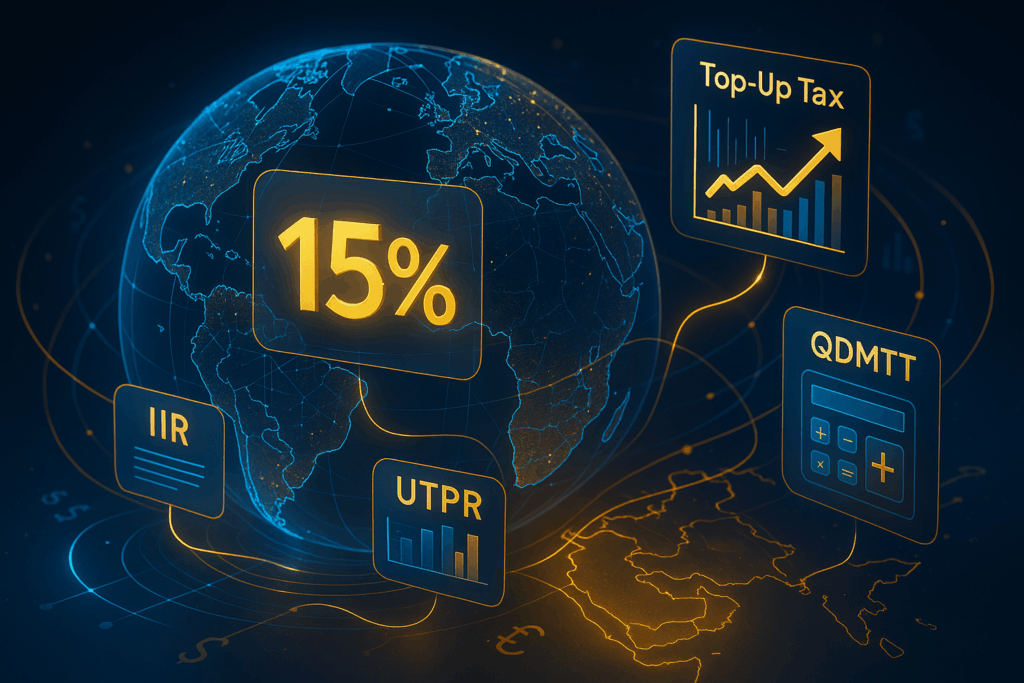
Pillar Two Global Minimum Tax (GMT 15%)
These two pillars redefine where profits are taxed and the minimum level of tax multinationals should pay internationally.
Understanding BEPS 2.0 is no longer optional it is a core compliance obligation with financial, operational, and strategic implications.
1. What Is BEPS 2.0?
BEPS 2.0 is the OECD’s global solution to address tax challenges arising from digitalization.
More than 140 jurisdictions including many MENA countries have joined the Inclusive Framework.
The reform has two pillars:
Pillar One Amount A
Reallocates taxing rights to market jurisdictions, even without physical presence.
Pillar Two Global Minimum Tax (GMT)
Imposes a minimum effective tax rate (ETR) of 15% on large multinationals (groups with revenue ≥ €750m).
2. Pillar One Amount A: What Companies Should Expect
2.1 Who Is in Scope?
Multinationals with:
Global turnover > €20 billion, AND
Profitability > 10%
(Some thresholds will decrease over time.)
2.2 What It Means
Countries where customers or users are located gain rights to tax a portion of the MNE’s global profits.
2.3 Impact on MENA
Countries such as:
Saudi Arabia
UAE
Egypt
Qatar
Jordan
… may gain new taxing rights over digital and consumer-facing MNEs operating without physical presence.
2.4 What to Prepare
Revenue sourcing systems
Customer location tracking
Market-based allocation policies
3. Pillar Two Global Minimum Tax (GMT 15%)
Pillar Two is the most immediate and impactful part of BEPS 2.0 for regional multinationals.
3.1 Who Is in Scope?
Groups with:
Consolidated revenue ≥ €750 million
Operations in multiple jurisdictions
3.2 Key Rules
Income Inclusion Rule (IIR)
Undertaxed Payments Rule (UTPR)
Qualified Domestic Minimum Top-Up Tax (QDMTT)
If any jurisdiction has an ETR below 15%, a top-up tax must be paid.
4. What MENA Multinationals Must Prepare in 2025
4.1 Data Collection Is the Biggest Challenge
Companies will need detailed data covering:
Deferred taxes
Timing differences
Permanent differences
CbCR data
Substance indicators
Global financial consolidation
Most ERP systems are not yet BEPS 2.0 ready requiring upgrades.
4.2 Legal Entity Restructuring May Be Necessary
Groups must assess:
Holding structures
IP structures
Finance hubs
Low-tax entities in UAE, Bahrain, or offshore jurisdictions
GMT may eliminate benefits of low-tax structures.
4.3 New Reporting Requirements
Pillar Two introduces:
GloBE information return
Top-up tax calculations
QDMTT filings
Governments in UAE, KSA, and Egypt are gearing up for implementation.
4.4 Increased Substance Requirements
To avoid artificial shifting of profits, multinationals must show:
People
Functions
Operations
Risk control
Board-level decision-making
4.5 Potential Cash Tax Impact
Low-tax jurisdictions will now have:
Higher tax burdens
Reduced exemptions
New top-up tax liabilities
Companies must model 2025 impacts now.
5. Impact on Egypt and Regional Groups
Egypt is expected to adopt GMT through domestic minimum top-up taxes, especially for:
Manufacturing groups
Tech and digital service exporters
Multinationals with shared service centers
Regional groups structured through:
UAE
Bahrain
Mauritius
Cyprus
… will face major changes in effective tax costs.
6. What Companies Should Do Now A Practical Roadmap
Step 1: Pillar Two Impact Assessment
Calculate ETR per jurisdiction
Identify low-tax entities
Model top-up tax exposure
Step 2: Data Gap Analysis
Evaluate ERP capabilities
Assess availability of financial data
Identify missing reporting elements
Step 3: Operating Model Review
Assess:
Supply chain
HQ functions
Financing structures
IP ownership
Shared service centers
Step 4: Governance & Documentation
Implement internal policies
Prepare for regulatory audits
Strengthen intercompany agreements
Step 5: Technology Readiness
Upgrade systems to handle:
Data extraction
Pillar Two reporting
Automated ETR calculations
Conclusion
BEPS 2.0 will fundamentally reshape global taxation in 2025.
Multinationals operating in Egypt and the broader Middle East must prepare early to avoid financial surprises, top-up tax exposures, or compliance breaches.
A proactive approach backed by proper data systems, governance, and structural planning will allow companies to navigate BEPS 2.0 efficiently and strategically.